Preamble
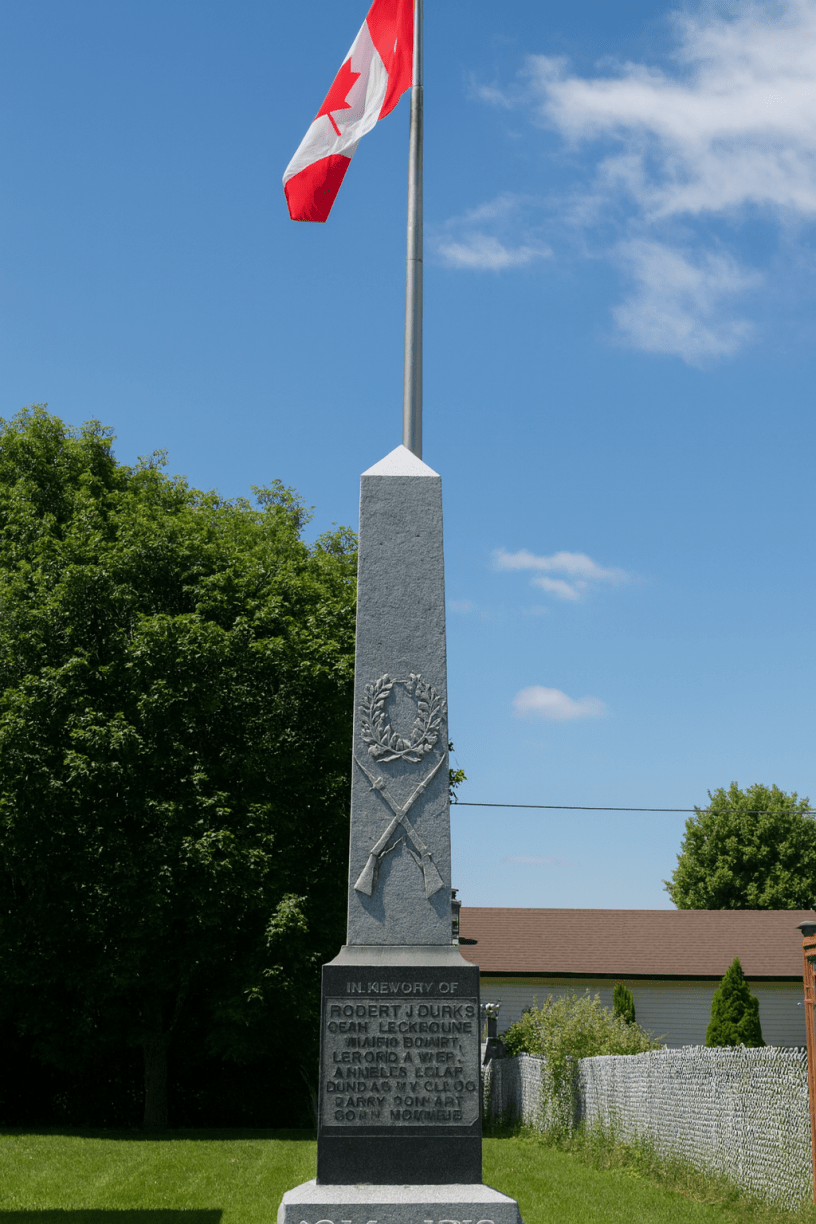
After having returned from my Village Walk in Chesterville I was struck by the Cenotaph located there and the large number of names on that memorial. It started me thinking about the impact that war had on small villages like Chesterville, on Avonmore, on Kenmore, or on all the other local villages near me. It also made me think about some of the war-related memories that I have stored away in my personal memory bank, things that have been shared with me by my father, or those related emotional experiences I have personally endured. It underlines for me how we must somehow contain the unthinkable leadership that promotes terrible atrocities and horrible pain and suffering on innocent people around the world today. Do we ever learn?
As November 11 approaches, Canadians collectively turn their thoughts to Remembrance Day—a time to honour those who have given their lives in defence of our country and in the pursuit of peace. Walking through rural villages across Eastern Ontario, I have observed the respectful and enduring tributes to fallen soldiers—cenotaphs standing proud at the centre of communities, meticulously maintained and inscribed with the names of local residents. These memorials serve as poignant reminders of the immense sacrifices made, not only by those who fought but also by the families who waited anxiously for their return.
Although the First and Second World Wars recede further into history with each passing year, the sense of loss and gratitude remains vivid for many Canadians. In the vivid historical accounts of local village historians like Murray Barkley in Avonmore, I can even see the images of railways connecting communities during wartime, soliciting the need to “sign-up”, and ultimately carrying volunteers overseas, leaving behind everything in the hope of securing a better future. Their journeys and horrendous sacrifices should not be forgotten .
My father told me little about the war he fought in for many years. I will never forgot, though, one story he told me that must have created excruciating pain for him as he recounted it to me. A mere child at that time, he told me about witnessing the death of his best friend mere moments before the armistice was to take place. I can see it even today, a young man, sitting in a guard post, exuberant to be going home after years of continuous fear and uncertainty, felled by a bullet one minute before 11:00am-the time of the official war ending in Europe. Today, for me, it underscores the randomness and cruelty of war. Such stories do not romanticize battle; instead, they reveal the deep emotional wounds that endure long after the fighting ends.
Visiting historical sites such as Dunkirk brings these lessons into sharp focus for me. In 1999 I was was fortunate enough to journey to Europe and to see many of these famous battle sites as part of my MBA program. Standing atop the cliffs, I sensed the magnitude of the loss experienced by Canadian soldiers who landed on those beaches only to be met by overwhelming enemy force. On that cliff in 1999, next to a commemorative gun, I met a Canadian wartime adversary: a former German soldier who wept openly by that gun. As he emotionally explained, he was forced to “keep shooting” or he himself would be shot. The moment revealed to me the shared humanity of all who are drawn into conflict—many compelled by circumstances beyond their control. War inflicts mental and emotional trauma not only on those who fight, but also on those who await their return and those who are forced to act against their will.
At Vimy Ridge, the Canadian commitment to remembrance continues. It is a site immaculately maintained with an emotional tall stone cenotaph with the names of those who died in that surrounding area. The grounds, still managed by Canada, are a living memorial to the sacrifices made in one of the most significant battles of the First World War. Guides, often retired soldiers themselves, dedicate themselves to preserving the history and collecting artefacts left behind—bracelets, letters, bones, and even unexploded grenades hidden beneath the soil for decades that suddenly emerge with the frequent rains. Their work is dangerous yet essential; it honours the memory of those who fought, and it ensures that future generations understand the true cost of war.
Two days after leaving Vimy, we were advised that the Canadian guide who showed this incredible site was killed by an old grenade, 80 years after the end of the war. It brought home to me the lingering dangers of conflict and the continued sacrifice required to keep remembrance alive. His dedication serves as a powerful example of the respect and care that underpin Canadian remembrance efforts.
War is a crucible that reveals some of the saddest characteristics of humanity. It is fuelled by leaders who, at times, send young men and women into unimaginable situations for questionable reasons. The cruelty and suffering wrought by such decisions must never be forgotten or excused. Canadians have historically rejected the ideologies of hate and violence, but the need to remain vigilant persists, as similar patterns continue to emerge more frequently today in our modern world.
Personal stories, historical sites, and village cenotaphs remind us that the excitement and glory of war are not reality. They are quickly replaced by grief, loss, and the enduring pain of families and communities. It is our responsibility to remember these lessons, to honour those who have served, and to work for peace in our time.
Lest we forget.
If you are interested in viewing the Chesterville Ontario walk of MainstreetRob, please follow the link https://www.youtube.com/@MainstreetRob
 MainstreetRob